A First Match on Television: Follow One Player Away from the Ball
Follow one player away from the ball to read a televised football match through movement, open space, and the choices teammates make around them.
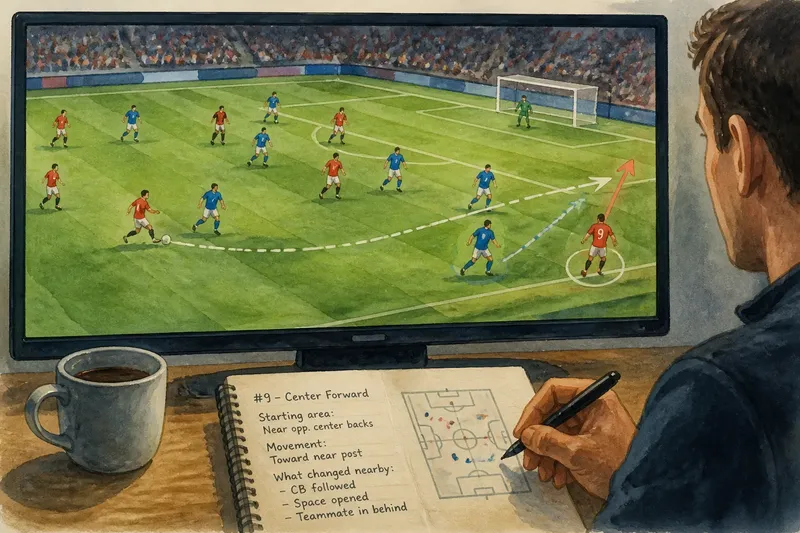
The camera follows a midfielder receiving a pass, while a forward at the far edge of the picture starts moving. To read a televised football match, follow one player away from the ball and notice how their movement changes the picture around them. This keeps your attention on a single thread instead of asking you to decode every player at once.
Choose a player whose movement you can track
Pick an outfield player likely to appear in the broadcast’s wider views: a center forward, central midfielder, or wide attacker. A shirt number from the team sheet or on-screen lineup is enough to identify them. Rather than choosing the most prominent player, choose someone whose position gives you a useful view of how teammates and opponents respond.
Keep a note on paper or in your phone with three prompts: starting area, movement, and what changed nearby. Record only moments that clarify a pattern. The aim is not to count touches or judge each decision; it is to connect one player’s movement to the next visible action.
Say you choose a center forward who starts near the opposing center backs. A teammate carries the ball toward the flank, and the forward moves toward the near post. If a defender follows, note the defender’s shift and whether another attacker approaches the space left behind. You can describe that sequence without deciding what the forward intended.
Establish a baseline before interpreting a run
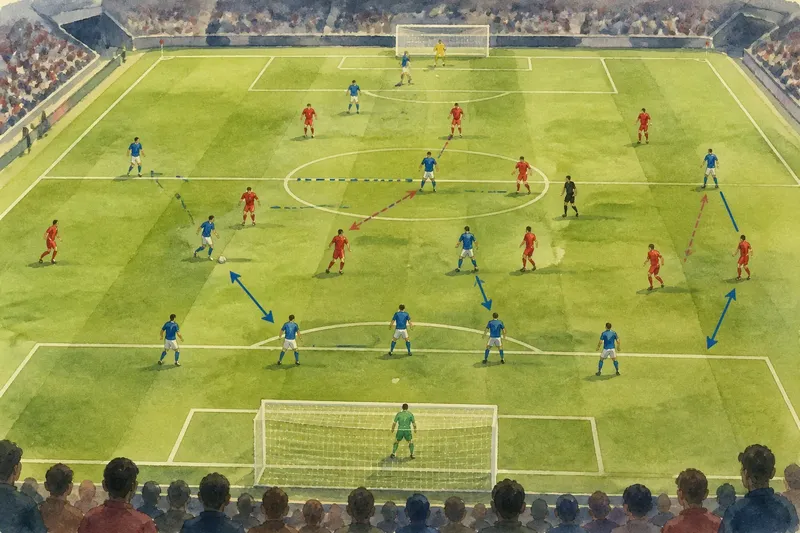
For the opening passages, notice where your player tends to stand when their team has the ball and when it does not. Use familiar pitch landmarks—the center circle, touchline, penalty-area edge, and halfway line—to orient yourself. Is the player usually wide, central, close to the defensive line, or deeper with teammates?
That usual area is a reference point, not a fixed role. A wide attacker may move inside as a teammate advances; a midfielder may drop toward the defenders to offer a passing option. Watch where the player returns when the action slows. Later movements are easier to understand against that loose baseline.
The broadcast may crop out the player just as they begin to move. Wait for a wide shot, replay, or stoppage rather than filling in what you cannot see. Nearby players may offer clues, but keep them separate from direct observation: “the shape suggests a central run” is more careful than claiming to know exactly where the player went.
Trace one movement into the next team action
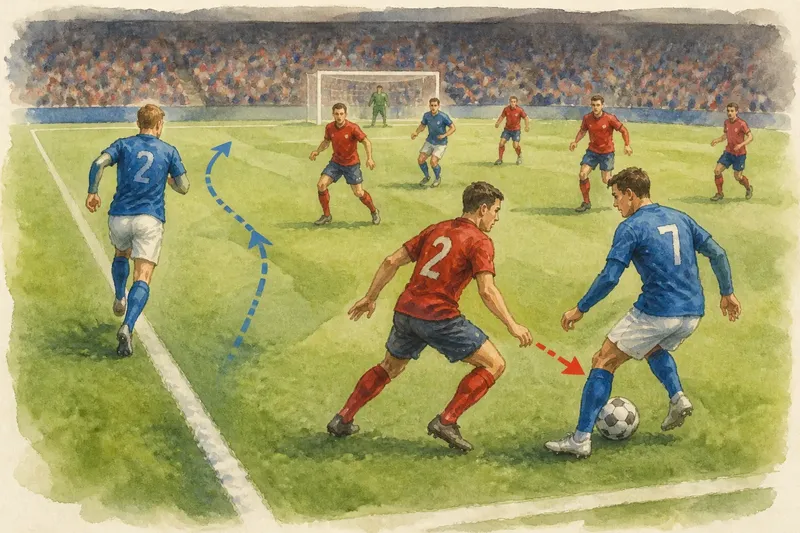
When your player moves, follow the sequence through rather than stopping at the run itself. A forward moving toward a defender might draw that opponent out of a line. A midfielder stepping between opponents might offer a route forward. A wide player holding the touchline might keep an opposing defender occupied in a broad area.
None of those effects is automatic. The defender may stay put, a teammate may already occupy the lane, or the pass may be unavailable. Look for what happens next: does a teammate enter the space, does the ball travel through it, or does the team choose another route? The response gives the movement context without requiring a verdict on whether it was “good.”
Also watch for the return. A player may move away from their usual area, then reset when the immediate action passes. If the same movement recurs, it may be part of a pattern; if it appears once, it may simply fit that passage. Describe what repeats before assigning a tactical explanation.
Keep the observation separate from the explanation
One way to avoid overreading a moment is to write down what the camera shows in plain language, then add a tentative interpretation only if the next action supports it. “The winger moved inside; the full-back stayed wide” is an observation. “The winger created an option through the middle” is an interpretation to check against what the team did next.
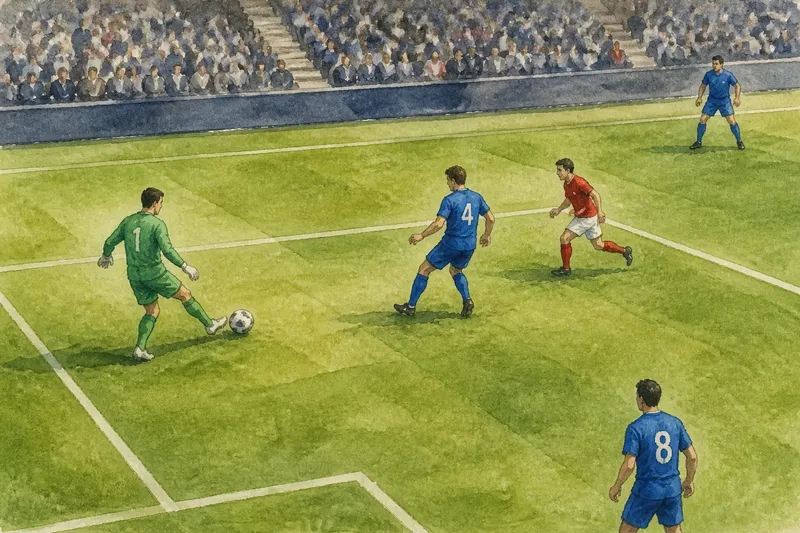
Imagine you are watching a team build from the back. Your chosen midfielder starts just ahead of the center circle. When a teammate passes sideways, the midfielder moves toward the touchline; an opponent follows, and a second teammate then receives the ball in the middle. Your note could read: “Moved wide; opponent followed; teammate had the central pass.” It records the starting point, movement, response, and outcome without claiming the pass was planned around that run.
This distinction makes uncertainty useful. If the camera misses the beginning, mark the movement as unclear. If the opponent does not follow, record that too. A careful account of what you saw is more informative than a confident story about motives that the broadcast cannot reveal.
What should you watch when the ball is elsewhere?
How do I follow a player during a broadcast?
Use the shirt number and pitch landmarks such as the touchline or penalty-area edge. If the player leaves the frame, wait for a wide shot or a settled passage rather than guessing at unseen movement.
What does it mean when a defender follows the player?
It shows that the defender moved with them, but not necessarily why. Check whether another player uses the vacated space or the ball travels through it before describing a wider effect.
Should I switch players if my choice rarely touches the ball?
Not automatically: movement can matter even when the player does not receive a pass. Switch if the broadcast repeatedly hides them or if you can no longer maintain a clear reference point.
How can I tell whether a run was intentional?
You usually cannot know a player’s thoughts from the broadcast alone. State the visible sequence—where they moved, how an opponent responded, and what happened next—without presenting a possible motive as fact.
Adjust your focus when the match changes
At halftime, look over your brief notes and compare the player’s usual area with their later movements. Perhaps they began wide and increasingly appeared in central spaces, or stayed central while the team changed how it advanced. You do not need to name a tactical adjustment; describe the difference you can see.
Keep the same player after halftime if they remain visible and their movements still offer a clear thread. If they are substituted or repeatedly outside the frame, choose another player and establish a fresh baseline before comparing. When the match becomes frantic, simplify: note whether your player is ahead of, level with, or behind the ball, then resume closer observation when play settles.
At the final whistle, write one sentence linking movement to an observable response. If no pattern became clear, say that plainly. Following one player away from the ball is most useful when it leaves room for uncertainty: a movement can change the picture without revealing the player’s private intention.