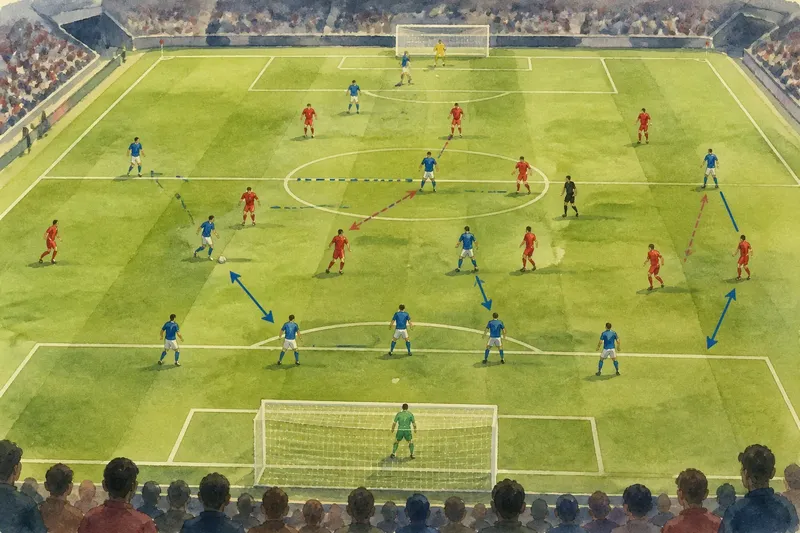
The Pressing Trap: When Chasing the Ball Opens the Middle
Learn to read a football pressing trap by following the first runner’s angle, the receiver’s options, and the next pass to see whether pressure steers play.
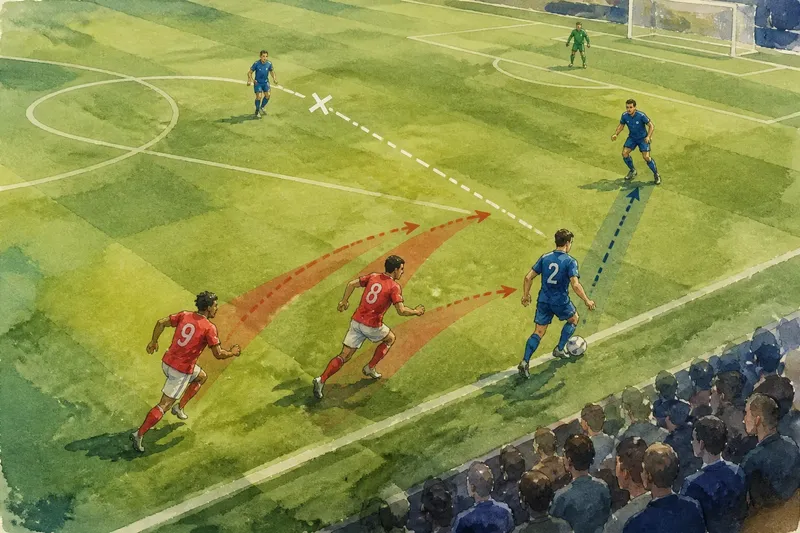
A midfielder receives near the touchline, and two opponents hurry toward him. The rush looks like a chase, but a glance at the nearest passing lanes can reveal its purpose. A football pressing trap is about where the ball is allowed to go, not just how quickly defenders approach it.
A pressing trap starts with a chosen route
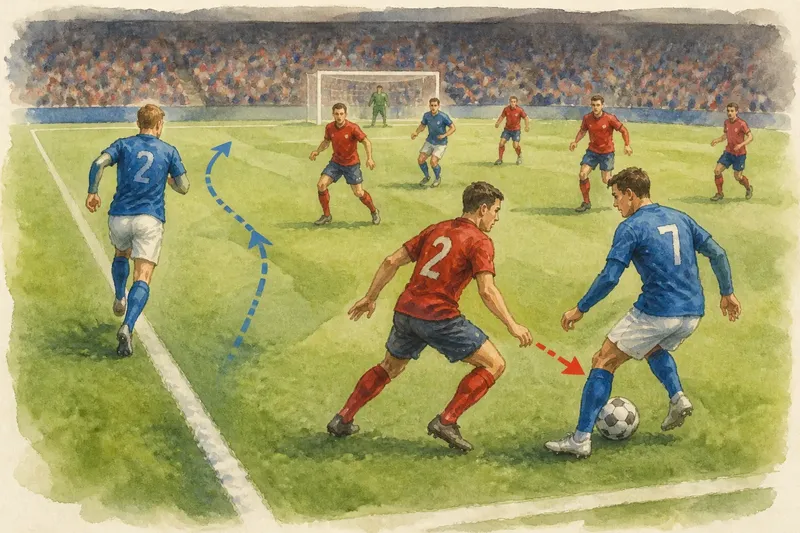
The first defender may curve a run to make one pass difficult while leaving another available. That can steer the ball toward a receiver the defending team expects to challenge. The approach angle matters: a straight sprint may put pressure on the carrier, while a curved run can also shape the carrier’s choices.
Follow the pass the defender appears to discourage, then watch the route left open. If the carrier chooses that route, note whether the receiver has time and space to take a useful next action. The intention becomes clearer only after the ball moves.
The receiver’s first touch reveals the trap’s effect
A pass into a crowded area does not automatically mean the defense has succeeded. The receiver might control toward the sideline, where the boundary limits an escape route, or turn inward into open ground. Watch the first touch, the receiver’s body position, and whether a nearby defender can arrive before the next pass.
Also notice the receiver’s available choices. A backward pass may relieve pressure without advancing play; a forward pass may carry the attack beyond the pressing players. The important clue is not simply whether the pass reaches its target, but what the target can do next.
Judge the press by its next action
After the ball reaches the intended receiver, look at the next defender’s movement. Does that player close the receiver while another opponent blocks an easy return pass? Or does the receiver have a clear route to turn and advance? Those details distinguish a planned trap from a rush that has merely moved the action toward the sideline.
For example, imagine a team pressing an opposing right-sided center back. The first forward angles the run to discourage a pass across the back line, and the defender plays to the right back. A nearby midfielder then arrives as the right back takes a touch toward the sideline, while another player makes the backward pass difficult. The expected observable result is that the right back must pass backward or attempt a pressured ball down the line; if the right back turns inward instead, the trap has not closed the route it meant to restrict.
Track the receiver and the nearest exit
Broadcast cameras often follow the ball and hide the players who shape the next choice. When the view widens, focus on the receiver and identify the simplest exit: a pass back, a pass down the line, or a turn into the field. Then see which defender can affect that option.
- Check the first runner’s angle: If the approach makes a particular pass awkward, watch for the alternative it encourages; if it does not shape a clear choice, treat the run as direct pressure rather than evidence of a trap.
- Check the receiver’s first touch: If the touch moves toward the boundary or a closing defender, expect fewer comfortable options; if it points into open field, watch for a turn or forward carry.
- Check the nearest forward pass: If a defender is positioned to challenge the likely target, look for a backward or sideways choice; if the target is free to receive facing forward, the pressure may be bypassed.
- Check the return route: If a defender blocks the pass back to the original carrier, see whether the receiver must attempt another exit; if that route remains open, the receiver may reset the play.
- Check the boundary: If the touchline limits the receiver’s turn, expect play to remain on that side; if the receiver can turn inside, follow whether a defender can meet the ball.
- Check the next pass: If it sends the receiver backward or into another challenge, the trap may be working; if it carries play forward beyond the press, the defenders have been played through.
These observations do not produce a simple score. A pass can beat one defender without defeating the whole arrangement, and a rushed touch can hand the ball away even when the trap was poorly shaped. Keep the question narrow: what did the receiver’s next action make possible?
What do viewers ask about a pressing trap?
How can you tell whether a defender is steering the ball?
Watch the defender’s approach angle and note which pass becomes awkward. If the carrier chooses the remaining route, check whether another defender is positioned to challenge the receiver.
Why might a pass to the sideline be deliberate?
The touchline can limit the receiver’s options for turning away from pressure. A sideline pass may suit the defense if a teammate can close the receiver and the route back inside is difficult.
Does a completed pass mean the trap failed?
No. The receiver may still be forced backward or into a second challenge. Follow the next action to see whether the team can progress the ball.
What is a clear sign that the trap has been beaten?
The receiver can turn into open space and play forward beyond the players who initiated the press. The defense then has to recover toward its own goal rather than contain the ball in the intended area.
Use the next pass to confirm what you saw
When a pressing trap seems likely, follow the ball through one more pass. A backward choice, a hurried touch, or a ball forced down the line can indicate that the receiver’s options were constrained. A clean turn and forward pass suggest the pressure did not close the useful route.
For a clearer read, briefly follow the likely receiver rather than the ball. Notice where that player can turn and which defender can affect the first touch. This keeps the focus on the trap’s central question: not whether defenders rushed toward the ball, but whether the route they left available led where they intended.