Why Teams Build from the Back
Why teams build from the back depends on the options ahead: learn how to read pressure, support, and the next pass to understand each opening choice.
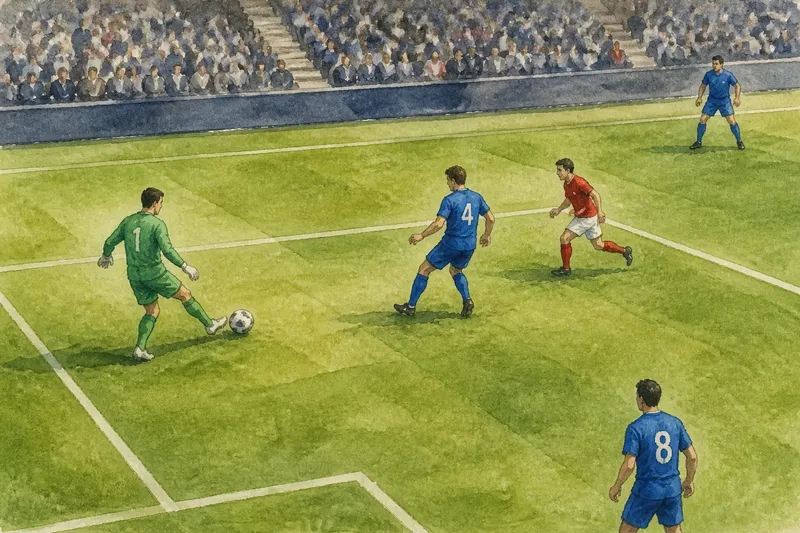
A goalkeeper rolls the ball to a center back, who takes a touch as an opponent jogs closer. The crowd waits to see whether the team will keep the ball or send it forward. Why teams build from the back is a question of where to begin an attack, what risks to accept, and which players can make the next pass useful.
Building from the back organizes the first pass
Playing out from defense means using the goalkeeper and defenders to start possession with short or controlled passes instead of immediately sending the ball toward the other team’s goal. The aim is not to keep the ball near the penalty area. It is to draw opponents toward the first pass, then find a teammate in space beyond their pressure.
The approach has become more visible as teams have treated the goalkeeper as an active passing option and defenders as participants in possession, not only as players who clear danger. But it is not a single formation or a rule that every club should follow. A team can build short on one occasion, play forward early on another, and change its approach as the match changes.
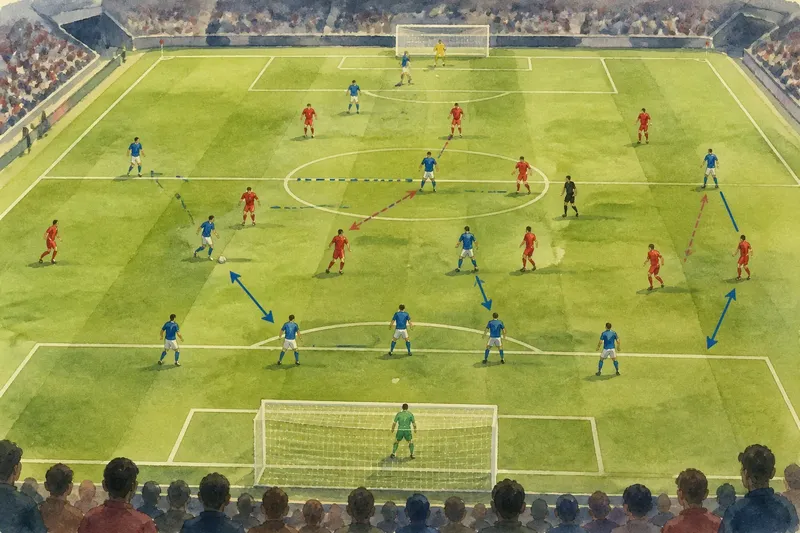
Watch the players around the ball, not only the pass itself. A center back may split wide, a midfielder may drop closer to the defenders, and the goalkeeper may move to offer an angle. Those movements create options; they also give the opponent clues about where to press.
Short construction offers control but asks for calm decisions
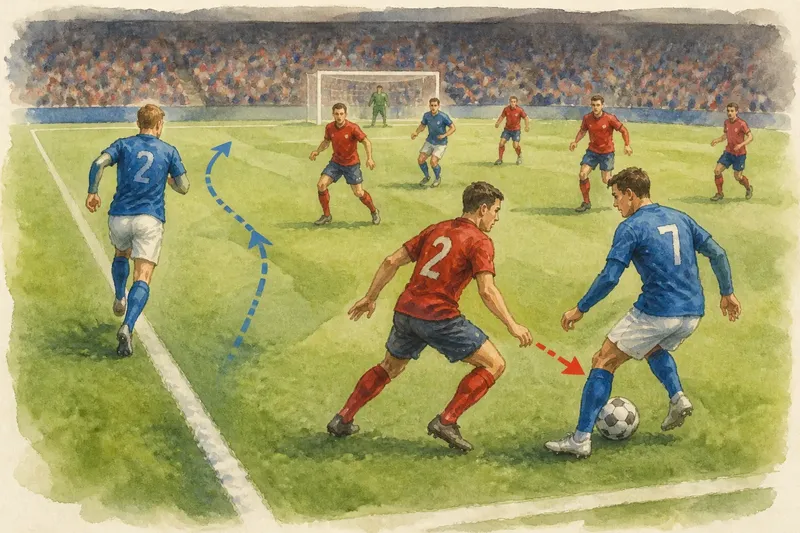
In a short build, defenders exchange passes while looking for a route through or around the first line of pressure. This can help a side keep possession and bring midfielders into the game facing forward. If the opponent presses with several players, a successful pass through that group may leave the attack with room to advance.
The tradeoff is that mistakes close to goal can be costly. A receiver may have little time, a passing lane can disappear, or a defender may be forced into a rushed touch. The approach depends on players recognizing pressure early and having support nearby. A team that lacks those conditions may turn a controlled start into a dangerous giveaway.
Short construction suits teams whose goalkeepers and defenders are comfortable receiving the ball and whose midfielders can offer clear passing options. It can also suit a team facing an opponent that presses in a predictable way, leaving a route open behind the press. The choice is less convincing when opponents can crowd the ball and nearby outlets without exposing space elsewhere.
A direct start trades close control for territory
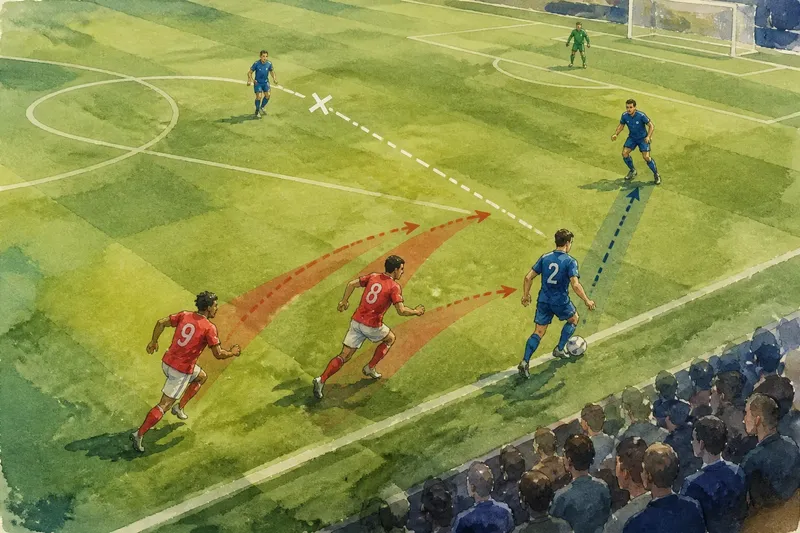
A team can bypass the first pressure with a longer pass toward a forward, a wide channel, or an area where a teammate can contest the ball. This is often called playing direct. It is not necessarily an aimless clearance: the intended receiver, the players gathering around the second ball, and the direction of the pass can make it a coordinated way to begin an attack.
The approach can suit a side with a forward who can hold off a defender, teammates ready to collect a loose ball, or a match in which short passes are being smothered. It can also relieve pressure when the goalkeeper or defenders have no safe short option. The cost is that the team may surrender immediate possession, and the ball’s destination can be harder to control than a nearby pass.
Direct play and building short are not opposites in every moment. A team that usually starts with short passes may send the ball long when the opponent commits players forward. A team that often goes direct may still use a short pass to draw the press before launching the next ball. The useful distinction is the intended route and the players prepared to make it work.
How can you tell which start fits the match?
What does playing out from the back mean?
It means beginning possession through controlled passes involving the goalkeeper and defenders, with the aim of progressing beyond the opponent’s first pressure. The phrase describes an approach, not a requirement to pass short every time.
Why involve the goalkeeper in the first phase?
The goalkeeper can provide an extra passing option and help defenders spread out to create angles. That option is useful only if the team has a sensible next pass and the goalkeeper is prepared for the pressure involved.
When is a direct pass the better choice?
It may make more sense when nearby outlets are tightly marked, a forward can contest the ball, or teammates are positioned to collect the second ball. The pass should have a purpose beyond simply moving danger away.
Does building short always mean a team is trying to dominate possession?
Not necessarily. A short opening can draw opponents forward before the team attacks the space behind them, rather than serving as an end in itself.
Read the available options, not the label
To judge a team’s choice, look for these visible clues and consider what each one implies:
- Pressure: Check how close opponents are to the first receiver. If the receiver has time to look up, a controlled pass may be available; if pressure is arriving immediately, look for a forward pass or a safer outlet.
- Support: Check whether defenders and midfielders offer passing angles. If several options are open, the team can try to retain the ball; if the ball carrier is isolated, a longer pass or a reset may be more sensible.
- Forward options: Check whether a teammate is available between the opponent’s lines or a forward can challenge for a longer pass. If either option is available, the team has a route forward; if neither is, it may need to recycle possession.
- Second-ball cover: Check whether teammates are close to the likely landing area of a long pass. If they are positioned to compete for the loose ball, the direct pass has support; if they are far away, a short outlet or clearance may be safer.
- Space behind the press: Check whether opponents have left room beyond their first line. If that space is reachable through a pass, the team can play through or over pressure; if the space is closed, it may need to draw opponents out or switch the point of attack.
- Goalkeeper’s angle: Check whether the goalkeeper is positioned to receive and pass safely. If a clear lane is available, the goalkeeper can help circulate the ball; if the lane is blocked or pressure is close, the team should use another outlet.
Imagine an invented match situation: a team restarts with its center backs near the penalty area, one opponent presses the ball, the nearest midfielder is marked, and a forward is free near the touchline. Two teammates move toward that forward’s likely landing area. The center back first checks the short lanes; with the midfielder still marked and the forward available, the defender sends a longer pass toward the touchline. The teammates contest the second ball, giving the team a chance to keep the attack moving. If those teammates had stayed deep, the same pass would have left the forward isolated, making a backward reset the more sensible choice.
Judge the plan by what follows the opening pass
A first pass can look cautious while serving an aggressive purpose. If the opposing team steps forward, space behind its midfield may open; if it stays back, the ball carrier may have time to move the team upfield. Conversely, a long pass can be part of a patient plan when the team deliberately gathers around the target and prepares for the next phase.
Why teams build from the back is best understood as a question of fit. Notice who is free, where pressure comes from, and what the team has arranged to do next. The useful start is not automatically the shortest or longest pass; it is the option that connects the first action to a plausible next one.